A practical labyrinth-building session in Park Brialmont became an unexpected experience of movement, conversation and community.
At the end of July, we gathered in Park Brialmont in Berchem, Antwerp, to turn theory into practice.
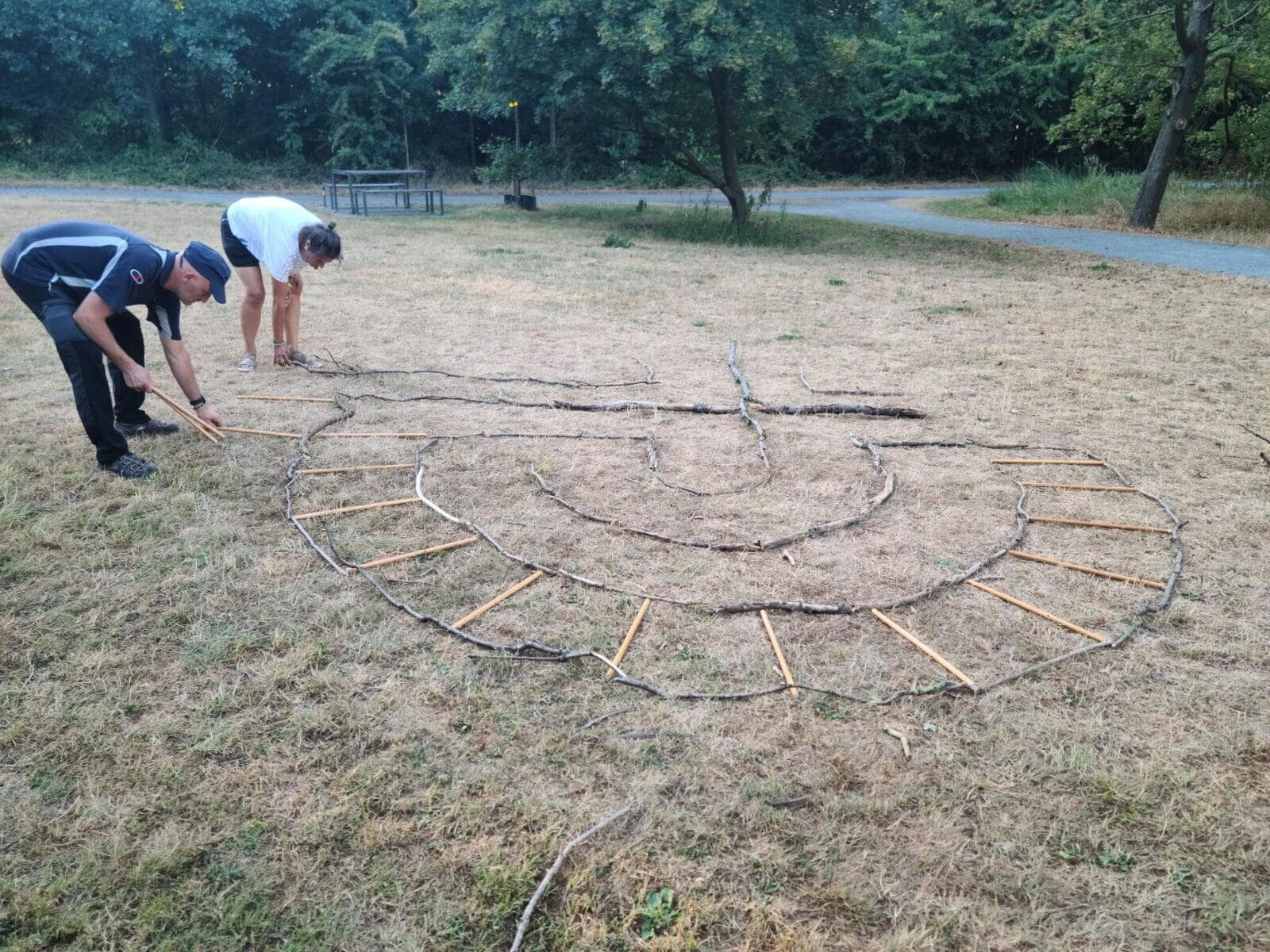
After an online introduction to labyrinths, we stepped outside to build one together. We needed no heavy structures or permanent intervention. We worked with what the park already offered: fallen branches, small sticks and the open ground beneath our feet.
Building with nature
We marked out the form and used sticks of similar lengths to make the lines visible. Each branch found its place and each person contributed to the pattern.
The labyrinth was made with nature rather than imposed upon it. It could be built, walked and later returned to the landscape without leaving a permanent mark. People needed no previous experience: they could collect materials, shape the path, watch the process or enter the labyrinth when it was ready.
As we worked, park visitors began to stop.
"What are you making?" several people asked. The growing pattern sparked curiosity and opened conversations. A woman walking her dog smiled and said, "That looks lovely. I will come back tomorrow to walk it, without my dog."
Her reaction showed how a temporary labyrinth can gently change the atmosphere of a public space. Even people who do not join the building immediately can feel invited to return and experience it in their own way.
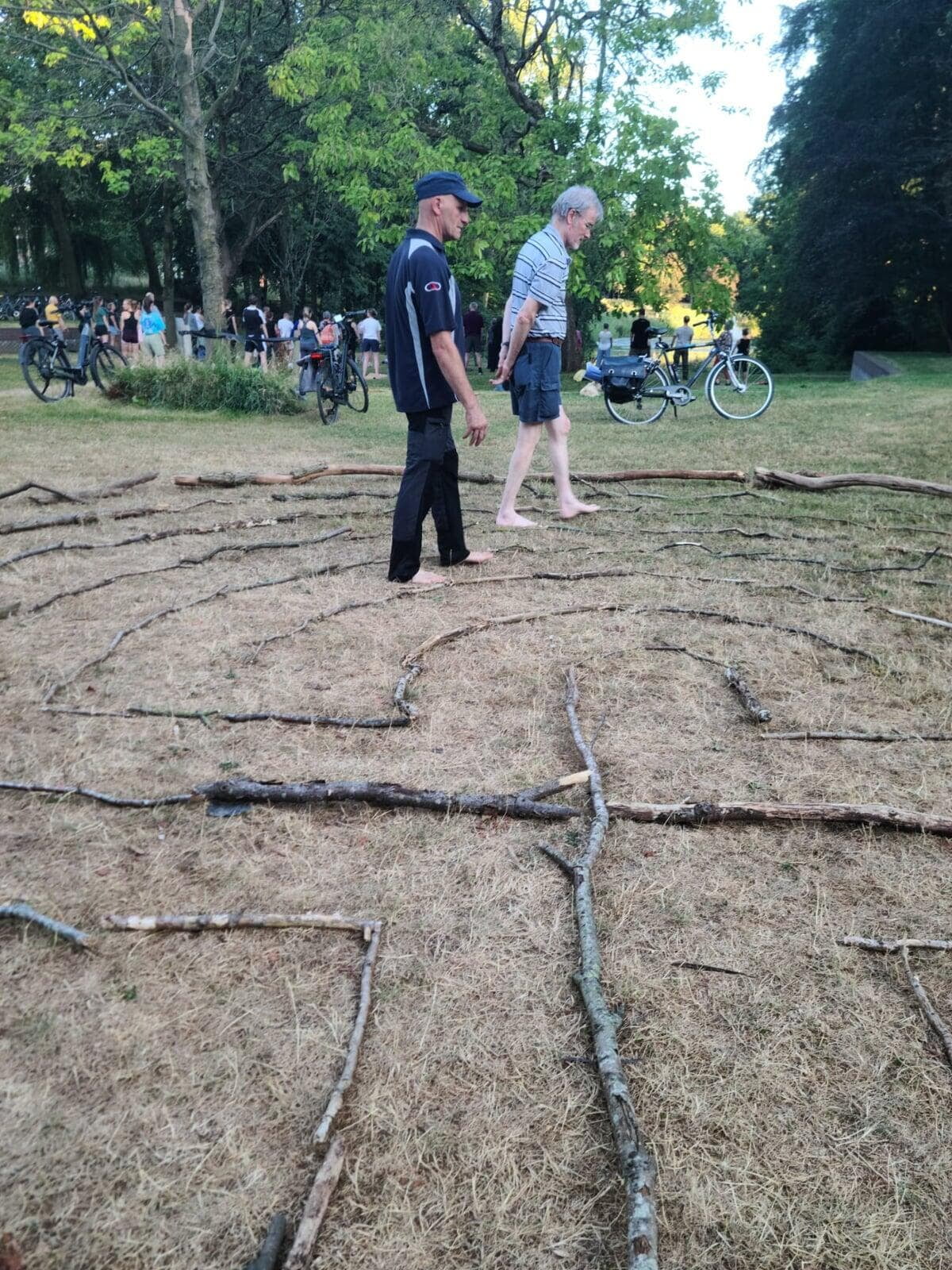
Participating in labyrinth in the Park
"Walking the completed labyrinth gave me an even greater energy boost and a feeling of harmony." (Ronny 2026)
From building to walking
A labyrinth is not a maze. There are no dead ends and nothing to solve. One continuous path leads towards the centre and back out again. The invitation is simply to slow down, follow the turns and notice what happens.
Ronny, one of the participants, shared how working with natural materials had brought the online theory to life. Walking the completed labyrinth gave him an even greater energy boost and a feeling of harmony.
The labyrinth was no longer an anonymous structure. We were walking something we had created together.
The man who arrived an hour early
Another visitor had arrived about an hour early for a different summer activity in the park. He had not planned to build or walk a labyrinth, but instead of waiting on the sidelines, he joined us.
Afterwards, we stayed to talk. The conversation moved from the labyrinth to stories from the adventurous life he had lived. Before leaving, he told us that he wanted to introduce the project to his yoga group.
Participation does not always begin with registration. Sometimes it begins with curiosity, a question or an unexpected hour in the park.
More than a temporary path
By the end of the afternoon, the labyrinth had created more than a visible pattern on the ground. It brought together practical learning, gentle movement, reflection, natural materials and spontaneous conversations between people who had not met before.
Temporary labyrinths can be adapted to different parks, audiences and programmes. They require relatively little infrastructure and offer an accessible way to combine nature experience, wellbeing, creativity, education and community connection.
The branches may be moved and the lines may disappear, but the experience continues through the people who took part, the stories they tell and the invitations that follow.
Bring a labyrinth to your park or community
Neolabyrinthium creates participatory labyrinth experiences for parks, municipalities, cultural programmes and community organisations.
Planning a project for Week of the Forest, a summer programme or another event in a green public space? We can develop a temporary labyrinth experience adapted to your location, audience and purpose.
Would you rather learn how to create and guide labyrinth experiences yourself? Follow the Neolabyrinthium online course and take the first steps from theory to practice.
Contact Neolabyrinthium to discuss a park project or discover the online course.