Walking a labyrinth in Denmark showed me 2 future topics
I want to take you with me on our journey this summer. This summer, we went on our honeymoon to Sweden.
A LABYRINTH THAT IS ALSO A GEOLOGICAL EXHIBITION
There was something else about this particular labyrinth that immediately fascinated me. "The stones."
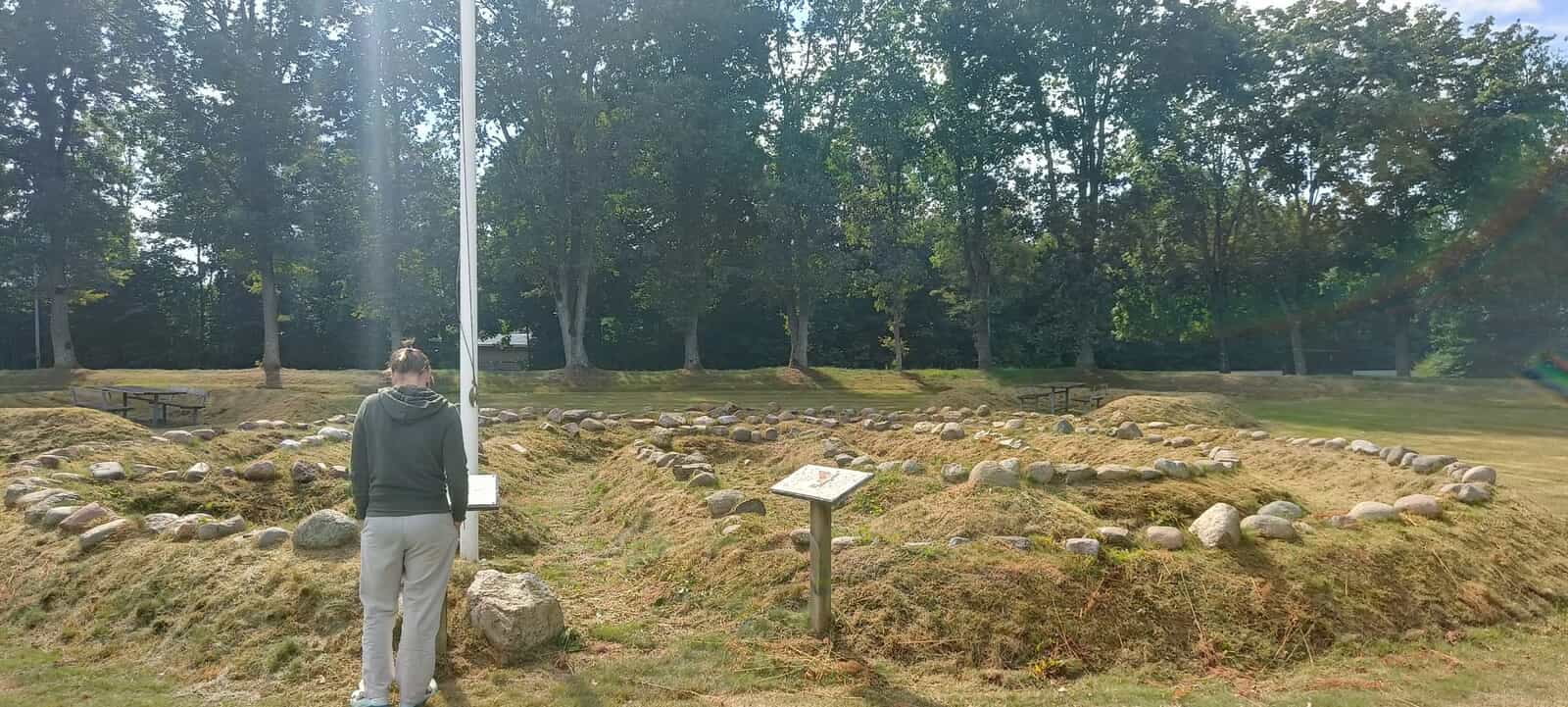
This is a circular, four-armed labyrinth, constructed with large natural stones. At first sight, you might simply see a beautiful stone labyrinth. But when we started reading the information panels, we discovered that the stones had not been placed randomly at all. The labyrinth is actually a geological exhibition.
Different sections of its path contain different types of rock. A detailed map explains where the main rock types and so-called indicator stones can be found within the labyrinth.
So by walking this labyrinth, you are not only following a path towards its centre. You are walking through the geological history of Scandinavia. Some of the stones take us hundreds of millions — and in some cases around two billion — years back into the history of our planet.
That thought alone made me stop for a moment. We humans experience a stone as something static. But these stones have stories.
STONES THAT HAVE TRAVELLED
Many of the stones found in Denmark did not originate there. During the Ice Ages, enormous glaciers moved across Scandinavia. As they travelled, they carried rocks with them from areas that are now Norway, Sweden and Finland. The ice transported these stones over enormous distances. When the glaciers eventually disappeared, many of the rocks remained behind in the Danish landscape.
Today they can still be found on beaches, in fields and in gravel pits.Among these travelling rocks are special stones called "ledeblokke" in Danish — indicator stones or guide stones. These stones have such distinctive geological characteristics that their original geographical source can sometimes be identified.
And because we know where they came from, they can tell geologists something else too: the direction in which the glaciers once travelled.
I found that fascinating.
A stone that can tell you where it came from. A stone carrying evidence of a journey made thousands of years ago.
A stone that becomes a guide. And all these stones had now been brought together in the shape of a labyrinth.
Not every stone came from far away
Not every stone in the labyrinth had travelled from another Scandinavian country.
Some tell the geological story of Denmark itself.
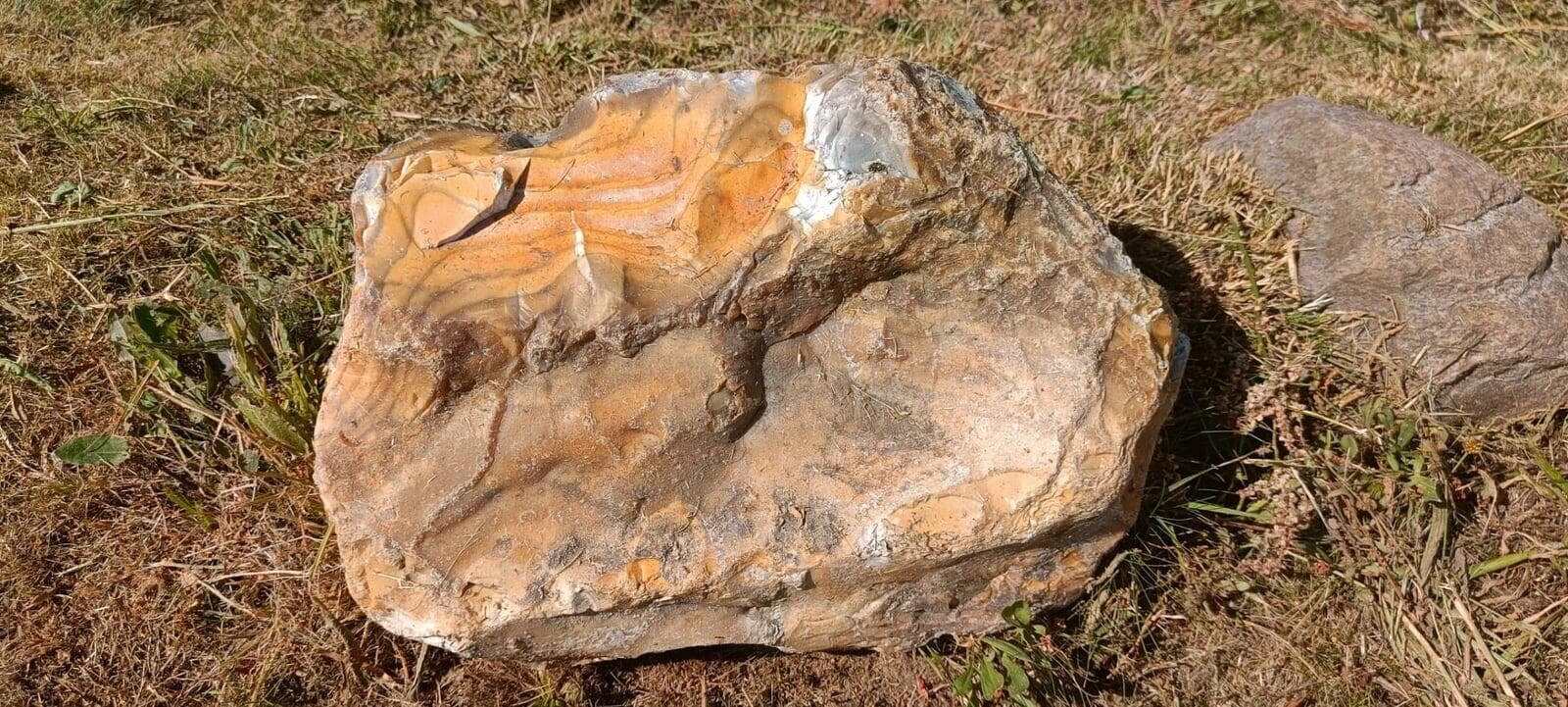
One that immediately caught our attention was a beautiful large piece of Danish flint, originating from Denmark's chalk formations.
Its orange, grey and almost white surfaces and its smooth, glass-like fractures made it stand out among the other stones.
I loved that contrast.
THE SHAPE CARRIES A STORY TOO
As a labyrinth builder myself, I am always interested not only in the material of a labyrinth, but also in its form.
This labyrinth has a circular, four-armed design.
From one entrance, the path repeatedly curves and changes direction before leading towards the centre. There are no choices to make and no dead ends. One path takes you in and brings you out again. Seen from above, the four arms give the design an almost cross-like structure within the circle.
Circle and four directions. Movement and centre. Here, the form has also been given a very practical purposeIt organises the geological exhibition itself.
The labyrinth becomes both symbol and map.
We thought we were following the labyrinth.
We didn't yet know that we were about to follow the stones.
WHEN LABYRINTHS BECOME GUIDES
I have visited many labyrinths, and one thing continues to fascinate me: a labyrinth can have a very different meaning depending on the moment in your life when you encounter it. You can enter with a question. You can enter without a question. You can walk towards the centre, stand there for a moment, and return without having received any obvious answer. And then life continues.
Days, weeks or sometimes even months later, something happens and suddenly the walk takes on another meaning. A connection appears that you couldn't see before. Perhaps that is one of the reasons labyrinths have survived for thousands of years. They do not only give us answers. They help us pay attention.
A labyrinth has only one path. You don't have to choose whether to turn left or right in order to find the correct way.You simply follow the path and experience what appears along it. Perhaps travelling can be like that too.
We thought we were simply travelling through Denmark on our way to Sweden.
We stopped at a labyrinth.We looked at some stones.
We read their story.
And then we continued our honeymoon. But perhaps the story had already begun.
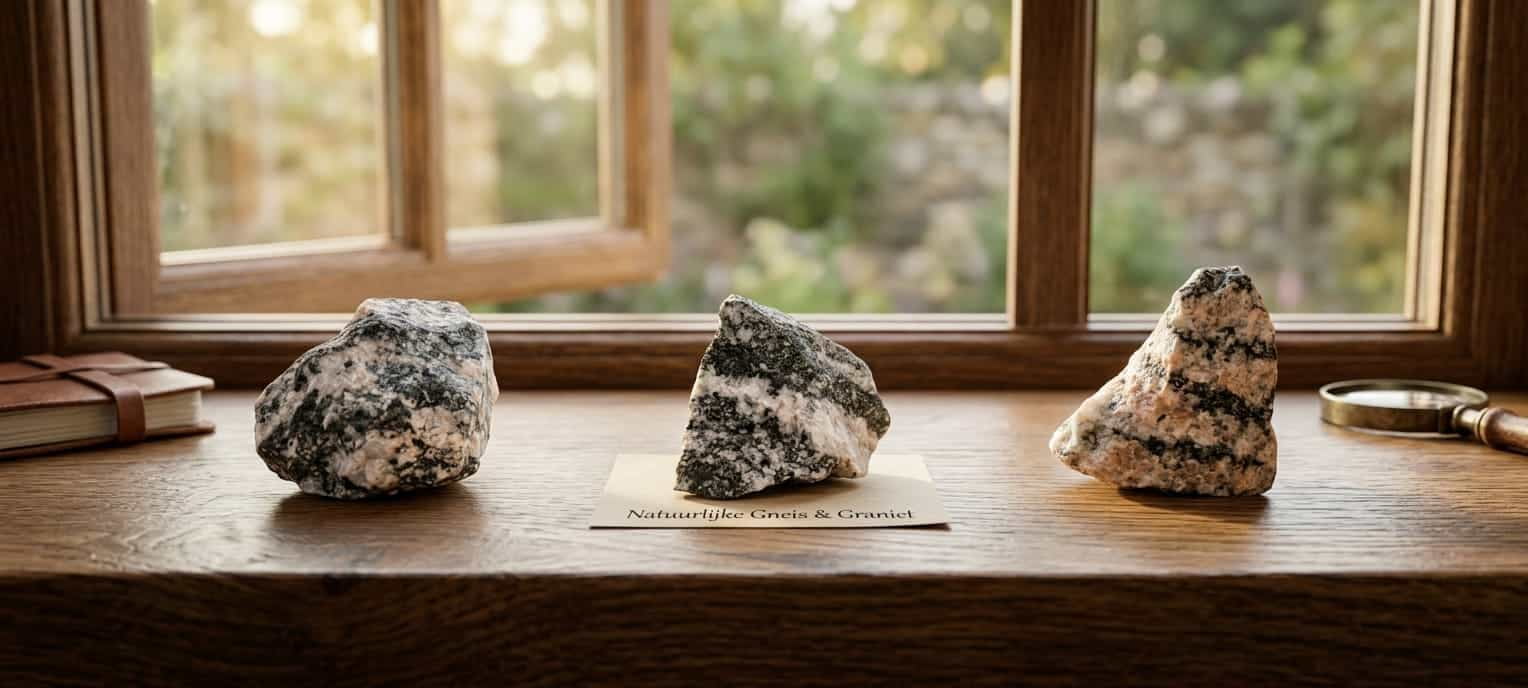
Gneiss/Diorite
We encountered quartz. Granite. Rhodonite and Diorite stone and other rocks and minerals that made us stop, look, touch and wonder.
What had started with a stone labyrinth in Denmark became a thread running through our journey in Sweden.
What if the labyrinth had already shown us something?
It had invited us to notice the stones. They had a message.
THE MESSAGE OF THE STONES
Only later did I realise that the labyrinth had guided us even further than I first thought.
During our journey through Sweden, we encountered quartz, granite, rhodonite and several other stones. When I looked into their symbolic and energetic meanings, something remarkable appeared: many of them reflected themes I was already working with in my own labyrinth.
One black-and-white stone in particular caught my attention. Its symbolism is about bringing opposites together — connecting our dualities instead of choosing one side over the other.
And that is exactly what my own Labyrinth of Harmony is about.
Suddenly, the circle felt complete.
A labyrinth made of stones had guided us towards the stones. And the stones, in turn, guided me back to the deeper meaning of my own labyrinth.
It felt as if labyrinths and stones had joined hands.
Sometimes a labyrinth does not give you an answer. It simply shows you what to notice next.
And sometimes, the path is literally written in stone.
Life is not a maze, but a labyrinth.
Cathy